This is a new series about the Indo-European language family. Again, my approach is purely descriptive, I don't want to hypothesize about the origin and ancestral location of proto-Ind0-European language (PIE). Instead I thought it might be nice to have maps showing world wide variation of Indo-European languages on a map. In order to prevent discussions I put the location of PIE in the middle of the Black Sea...
Today, I want to present a map for the word "I".
The map shows just the word for "I", not the corresponding language. The words are extracted from various sources, mostly from the Indo-European lexical cognacy database. To see the interactive maps, download the gmp files I created and open them at gmapgis.com.
How to see interactive maps:
1. Download map (gmp file).
2. Go to gmapgis.com.
3. Click "Project".
4. Upload map from your computer (the gmp file you just downloaded).
5. Click "Open".
6. Enjoy.
If you are interested to see the names of the included languages, I made a spreadsheet.
I included living and extinct languages, my main focus are the Swadesh words and the Indo-Iranian languages.
Total Pageviews
Thursday, February 28, 2013
Monday, February 25, 2013
Haplogroup J1 (L222.2-) tree STR67
I should note that STR trees do not necessarily branch along the SNPs, and this is even more true for trees based on "only" 67 STR values.
In this tree we have 3 individuals with Zaza/Kurdish ancestry, two from the Northern part and one from the Central part. In the tree I highlighted them in red.
E11334 (Suleyman Efendi 19th century Askale Erzurum, Turkey)
N91920 (Kurdish Serzer, 1805 - 1846, Turkey)
N88767 (Sulaymania, Iraq (Kurdistan) of sharif descent)
Rectangular tree of J1 (L222.2-) tree STR67 (pdf)
Polar tree of J1 (L222.2-) tree STR67 (pdf)
Pdf files are also available in the data sink.
Due to the large size of the tree I split the tree image into pieces (see below).
E11334
The oldest branch of J1 are the recently discovered Z2223 individuals (highlighted in yellow at the top). Interestingly, E11334 (originally from Erzurum) belongs to this very old J1 Z2223+ branch. Probably due to its age this Z2223 branch has been discovered in various regions of the world:
1x Turkey (E11334 Suleyman Efendi 19th century Askale Erzurum)
2x Germany (18215, Daniel May, 1722-1821 and N50051, Konrad Francois Schnabel b. 1755 Martinhagen Germ.)
1x Ireland (211228, Michael Brethour, 1774 - 1862)
1x Oman (M6600)
1x Qatar (208949, albloushi)
1x Unknown Origin (154731)
N91920
N91920 is not part of the J1c3* Jewish Cluster A but is present at the root of this Jewish Cluster.
The characteristic SNP of this Ashkenazi Jewish cluster is L817. Similar to the R1a1a Ashkenazi-Levite cluster, we have now a J1 Ashkenazi cluster that shows similarities to the STR data of a Kurdish individual. It would be interesting to see if N91920 is L817+.
Two samples from Germany are located at the root of this large and "oldest" Ashkenazi Jewish cluster as well:
21075 (Jacob Graber) and 187564 (Louis Graber).
Update April 18, 2013:
N91920 is now confirmed to be L817+ L818+ L816-, just like the Ashkenazi Jewish cluster.
21075 (Jacob Graber) is now confirmed to be L817+ L818+ L816- as well.
The Ashkenazi Jewish cluster is L817+ L818+ L816+, that means that the L816 is younger than L817. The closest and the only Middle Eastern relative of the L816+ Ashkenazi Jewish cluster is Kurdish.
N88767
N88767 forms a "mini"cluster (highlighted in light blue) with N101140 from Italy (Alphonso Villani 1885-1961), however, the branch length of N88767 indicates that this calculated proximity is not strong.
Friday, February 8, 2013
Cultural Distance Calculator Part 3
Today, I want to present network clusters for cultures to compare them with each other.
It is interesting to note that...
1. Folk music traditions are more determined by the maternal lineages (correlation with mtDNA-haplogroups),
2. "Mother" languages are more determined by the paternal lineages (correlation with Y-Chromosome-haplogroups).
3. Apparently folk stories traditions are more determined by the paternal lineages as well.
4. The resulting culture is a mix of these traditions (+ religious believes + the history).
1. Network based on Folk music traditions (Pamjav et al.):
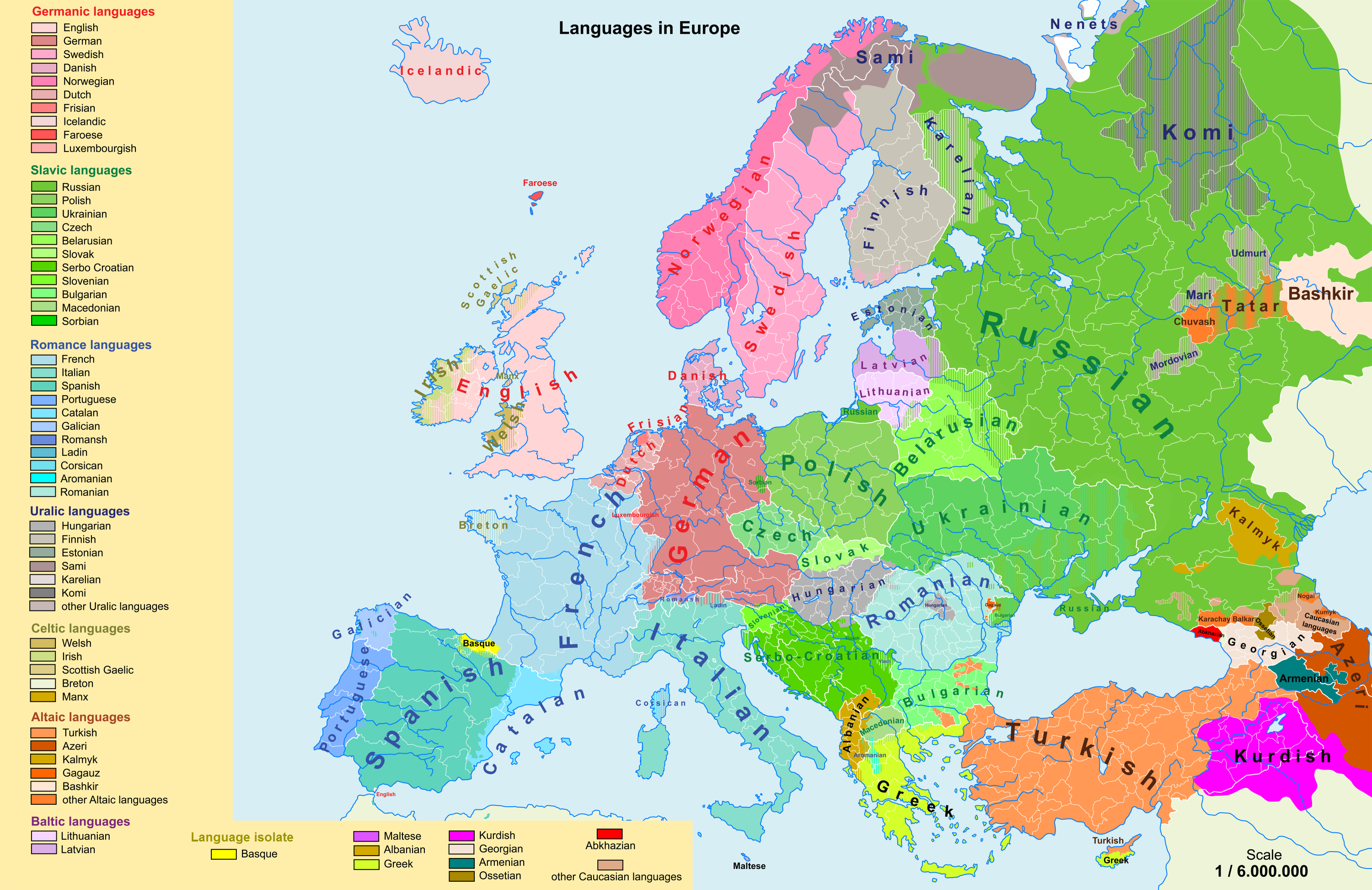
2. Language families in Europe:
http://upload.wikimedia.org/wikipedia/commons/1/14/Languages_of_Europe_map.png
Y-haplogroups in Europe:
3. Cultural distance network for Folk tales (from Ross et al.)
Cultural distance network for Folk tales (based on Supplementary table S8 from Ross et al. and SplitsTree software):
It's great to know that the cluster networks can be regenerated with the raw data distance matrix and SplitsTree. The only differences between the published network and the network I generated are the positions of the "Germans" and "Swedish in Finland" that appear to be more central in the cluster.
4. Cultural distance network based on Geert Hofstede (Europe only):
Based on Hofstede's parameters for culture, Europe splits into Northern and Southern group with some intermediates
Cultural distance tree based on Geert Hofstede (Old world only):
Europe: red
Middle East and North Africa: green
Asia: green asparagus
New World "Latin America": brown
New World "English-speaking": grey
Pacific: pink
Africa: black
Related articles:
Cultural Distance Calculator
Cultural Distance Calculator Part 2
Musical language groups
It is interesting to note that...
1. Folk music traditions are more determined by the maternal lineages (correlation with mtDNA-haplogroups),
2. "Mother" languages are more determined by the paternal lineages (correlation with Y-Chromosome-haplogroups).
3. Apparently folk stories traditions are more determined by the paternal lineages as well.
4. The resulting culture is a mix of these traditions (+ religious believes + the history).
1. Network based on Folk music traditions (Pamjav et al.):
2. Language families in Europe:
http://upload.wikimedia.org/wikipedia/commons/1/14/Languages_of_Europe_map.png
Y-haplogroups in Europe:
3. Cultural distance network for Folk tales (from Ross et al.)
Cultural distance network for Folk tales (based on Supplementary table S8 from Ross et al. and SplitsTree software):
It's great to know that the cluster networks can be regenerated with the raw data distance matrix and SplitsTree. The only differences between the published network and the network I generated are the positions of the "Germans" and "Swedish in Finland" that appear to be more central in the cluster.
4. Cultural distance network based on Geert Hofstede (Europe only):
Based on Hofstede's parameters for culture, Europe splits into Northern and Southern group with some intermediates
Cultural distance tree based on Geert Hofstede (Old world only):
Europe: red
Middle East and North Africa: green
Asia: green asparagus
New World "Latin America": brown
New World "English-speaking": grey
Pacific: pink
Africa: black
Related articles:
Cultural Distance Calculator
Cultural Distance Calculator Part 2
Musical language groups
Friday, January 18, 2013
Data Sink for KurdishDNA.blogspot.com
Onur, one of my readers suggested:
So I did exactly that, here is the link for the data sink.
It is also accessible on the right side in the category "DATA".
It also contains STR111 values of more than 5000 individuals from all public project and STR values of more than 5000 individuals from various scientific publications.
Enjoy.
It would be nice if you put together all your useful genetic-related blog data in a data sink such as the one employed by the owner of the Vaedhya blog and update your data sink according to the changes in your blog data, so that it becomes much easier to browse and access your blog data.
So I did exactly that, here is the link for the data sink.
It is also accessible on the right side in the category "DATA".
It also contains STR111 values of more than 5000 individuals from all public project and STR values of more than 5000 individuals from various scientific publications.
Enjoy.
Thursday, January 17, 2013
R1a1a STR111 tree
Today, I want to update the STR111 tree of R1a1a that I have presented earlier here and here. I have now collected a much larger number of samples, which makes the tree more complex. Since a lot of individuals in this tree are in the R1a1a and subclades project, I added the group name of all these individuals. Of course, this tree is based on STR data only, so the initial branching of the different SNPs can be off, e.g. Z93+ is split into multiple clusters. However, some clusters are fairly robust in terms of structure and subbranching.
Rectangular tree of R1a1a STR111 (as pdf):
Polar tree of R1a1a STR111 (as pdf):
Due to the size of the tree I split the tree into pieces. Let's look into the details:
As mentioned the initial branching in the STR111 tree is pretty messy with no clear clustering but overlapping of various SNPs. At least N86494 from Belarus with M417- ended up in the pole position. Besides very small clusters from Ireland and England and a mix of Z93+ individuals (L657+ and L657-) from Central Asia and Middle East, the first clear cluster in this tree is "4. A2. Z283+ M458+ L260+ Central European branch, West Slavic subclade", most individuals are from Poland.
Next, the narrow "9. E1. Z93+ Z94+ Z2122+ "Ashkenazi-Levite" cluster" emerges. The closest isolate individual to this R1a1a Ashkenazi-Levite cluster is the Iraqi Kurdish individual H1483. I described this close genetic proximity in some earlier posts (here and here) when STR data were still very limited, but now we have STR111 data of H1483 confirming the predicted proximity.
Other close matches to the Ashkenazi-Levite cluster are 116213 from Palestine and two Scots (162927 and 221184).
On the next two parts, we have the Z280+ individuals forming a lot of clusters, one of them is the cluster "6. J1. Z280+ CTS1211+ (CTS3402+) Southern Baltic type". Within this large mega-cluster a few Z93+ isolated individuals and isolated clusters sneaked in, e.g. the "9. C7. Z93+ Z94+ L657- Z2122-, Arabic II" cluster, and the "9. C5. Z93+ Z94+ L657-(?), Bashkirs" cluster.
Next, we have no real clustering but a mess...
Next, the nice "Z280+ CT1211+ (CTS3402-) Carpathian cluster" comes up with a clear cut between P278+ and P278- individuals.
Next, the second group of M458+ individuals appears (L260- only) forming a nice cluster. This "Z283+ M458+ L1029+ L260-" is a Central European branch.
Next, we have a mix of individuals from both major branches (Z93 and Z283) followed by CTS3402+ individuals from Eastern Europe.
Next, we have a mix, no real clustering.
Next, we have Z284+ individuals forming a cluster:
Next, we have the L664+ individuals forming a large nice cluster. Based on the current R1a SNP tree, L664+ was a very early split. Most of these individuals are from the UK and Ireland.
Next, the Z92+ cluster emerges with people mostly from Eastern Europe.
Next, we have the Z284+ individuals forming two clusters, the Z288+/Z287+ cluster and a cluster of Z287- individuals.
Finally, the last cluster in this this tree: Z284+, L448+.
If you are getting confused by all these abbreviations, then this is okay. For clarification, I can recommend this schematic tree made by Michal.
http://eng.molgen.org/download/file.php?id=237&mode=view
Rectangular tree of R1a1a STR111 (as pdf):
Polar tree of R1a1a STR111 (as pdf):
Due to the size of the tree I split the tree into pieces. Let's look into the details:
As mentioned the initial branching in the STR111 tree is pretty messy with no clear clustering but overlapping of various SNPs. At least N86494 from Belarus with M417- ended up in the pole position. Besides very small clusters from Ireland and England and a mix of Z93+ individuals (L657+ and L657-) from Central Asia and Middle East, the first clear cluster in this tree is "4. A2. Z283+ M458+ L260+ Central European branch, West Slavic subclade", most individuals are from Poland.
Next, the narrow "9. E1. Z93+ Z94+ Z2122+ "Ashkenazi-Levite" cluster" emerges. The closest isolate individual to this R1a1a Ashkenazi-Levite cluster is the Iraqi Kurdish individual H1483. I described this close genetic proximity in some earlier posts (here and here) when STR data were still very limited, but now we have STR111 data of H1483 confirming the predicted proximity.
Other close matches to the Ashkenazi-Levite cluster are 116213 from Palestine and two Scots (162927 and 221184).
On the next two parts, we have the Z280+ individuals forming a lot of clusters, one of them is the cluster "6. J1. Z280+ CTS1211+ (CTS3402+) Southern Baltic type". Within this large mega-cluster a few Z93+ isolated individuals and isolated clusters sneaked in, e.g. the "9. C7. Z93+ Z94+ L657- Z2122-, Arabic II" cluster, and the "9. C5. Z93+ Z94+ L657-(?), Bashkirs" cluster.
Next, we have no real clustering but a mess...
Next, the nice "Z280+ CT1211+ (CTS3402-) Carpathian cluster" comes up with a clear cut between P278+ and P278- individuals.
Next, the second group of M458+ individuals appears (L260- only) forming a nice cluster. This "Z283+ M458+ L1029+ L260-" is a Central European branch.
Next, we have a mix of individuals from both major branches (Z93 and Z283) followed by CTS3402+ individuals from Eastern Europe.
Next, we have a mix, no real clustering.
Next, we have Z284+ individuals forming a cluster:
Next, we have the L664+ individuals forming a large nice cluster. Based on the current R1a SNP tree, L664+ was a very early split. Most of these individuals are from the UK and Ireland.
Next, the Z92+ cluster emerges with people mostly from Eastern Europe.
Next, we have the Z284+ individuals forming two clusters, the Z288+/Z287+ cluster and a cluster of Z287- individuals.
Finally, the last cluster in this this tree: Z284+, L448+.
If you are getting confused by all these abbreviations, then this is okay. For clarification, I can recommend this schematic tree made by Michal.
http://eng.molgen.org/download/file.php?id=237&mode=view
Tuesday, January 15, 2013
Haplogroup J1 (L222.2-) tree STR111
Today, I want to present the haplogroup J1 tree with STR111 data. Most of the tested individuals are from the Arabian peninsula, form a narrow cluster and have the haplogroup J1b2b1 (aka J1c3d2)
L222.2+, which could be seen in my previous J1 tree. I excluded those L222.2+ from the new tree, and Roberto Raciti helped me collecting all J1 L222.2- individuals with STR111 data (N=179).
Here are the results.
I highlighted Anatolian cluster in cyan to turquoise.
I highlighted Jewish clusters in orange to brownish.
I highlighted Arab clusters in pink to purple.
Rectangular tree of J1 L222.2- STR111 (as pdf):
Polar tree of J1 L222.2- STR111 (as pdf):
Edit 02/26/13:
I added six more individuals (N=185).
Rectangular tree of J1 L222.2- STR111 (as pdf):
Polar tree of J1 L222.2- STR111 (as pdf):
Edit 03/27/13:
I added sixteen more individuals (N=201).
Rectangular tree of J1 L222.2- STR111 (as pdf):
Polar tree of J1 L222.2- STR111 (as pdf):
Here are the results.
I highlighted Anatolian cluster in cyan to turquoise.
I highlighted Jewish clusters in orange to brownish.
I highlighted Arab clusters in pink to purple.
Rectangular tree of J1 L222.2- STR111 (as pdf):
Polar tree of J1 L222.2- STR111 (as pdf):
Edit 02/26/13:
I added six more individuals (N=185).
Rectangular tree of J1 L222.2- STR111 (as pdf):
Polar tree of J1 L222.2- STR111 (as pdf):
I added sixteen more individuals (N=201).
Rectangular tree of J1 L222.2- STR111 (as pdf):
Polar tree of J1 L222.2- STR111 (as pdf):
Monday, January 14, 2013
Kurdish mtDNA data VIII
Just an update:
1x B4b1a (Kurd from Turkey)
1x C4b (Alevi Kurmanji)
1x G2a (Sorani)
1x H CRS (Kurds from Iran; Quintana-Murci et al., 2004)
6x H (Kurds from Georgia; Comas et al., 2000)
2x H with T16311C (Kurds from Georgia; Comas et al., 2000)
1x H with C16218T (=H1ag1a or H1aq1 or H20) (Kurds from Georgia; Comas et al., 2000)
1x H with C16192R, C16261T (similar to: JN415470(Italy-LHON) Achilli Haplogroup H 19-AUG-2012 (Kurds from Georgia; Comas et al., 2000)
1x H5 16051G, 16255A, 16304C, 16319A, 16327T, 263G, 315.1C, 456T (Kurds from Iraq; Al-Zahery et al., 2012) 1x H5a1 (Sorani)
1x H13a2 (Alevi Kurmanji from Dersim)
1x H14 (Yezidi)
1x H14a with T16311C, C16256T, T16352C (=H14a +T16311C ) (Kurds from Georgia; Comas et al., 2000)
1x H15a1 (Sorani; mtDNA fully sequenced here and here)
1x H15b (Sorani)
1x H15b T16086C (close to EU600353(Druze) Shlush)(Kurds from Iran; Quintana-Murci et al., 2004)
1x HV* CRS (Kurds from Iran; Quintana-Murci et al., 2004)
1x HV* 16174 (Kurds from Iran; Quintana-Murci et al., 2004)
1x HV1a1 C16067T, C16355T (=HV1a1) (Kurds from Iran; Quintana-Murci et al., 2004)
1x HV2 C16168T, T16189C, T16217C, C16287T (Kurds from Iran; Quintana-Murci et al., 2004)
1x HV (Sorani)
1x HV (Kurmanji from Zakho)
1x I1a G16129A, C16168T, T16172C, 16173, C16223T (Kurds from Iran; Quintana-Murci et al., 2004)
1x I with G16129A, C16223T (Kurds from Georgia; Comas et al., 2000)
1x I1a1d with G16129A, C16223T, T16172C, T16189C, C16083T, C16355T (=I1a1d+C16083T, C16355T) (Kurds from Georgia; Comas et al., 2000)
1x I5a (Zaza from Dersim)
1x J1b C16069T, T16126C, G16145A, C16222T, A16235G, C16261T, T16311C (Kurds from Iran; Quintana-Murci et al., 2004)
1x J1b (Sorani)
2x J1b1b1 C16069T, T16126C, G16145A, C16261T, 16519C, A73G, A263G, C295T, 309.1C 315.1C, C462T, T489C, 523DEL, 524DEL (very close to JF939049(Armenian)) (Kurds from Iraq; Al-Zahery et al., 2012)
1x J1b4 C16069T, T16126C, G16145A, C16222T, C16261T, C16278T, C16287T (Kurds from Iran; Quintana-Murci et al., 2004)
1x J1c (Alevi Kurmanji from Dersim)
1x J1c2m (old J1c2a) C16069T, T16126C, 16148T, A73G, 185A, 228A, A263G, C295T, 315.1C, C462T, T489C, 523DEL, 524DEL (close to JQ797801 from Romania and JQ797802 from West-Siberia (Khanty))(Kurds from Iraq; Al-Zahery et al., 2012)
1x J1d (Feyli, originally from Iran)
1x J1d (Kurd from Iraq)
1x J2a1a (Kurd from Turkey)
1x J2b1 (Kurd from Iraq/Iran)
1x JT with T16126C, C16067T, T16311C (=JT) (Kurds from Georgia; Comas et al., 2000)
1x K1a T16093C, T16224C, T16311C (Kurds from Iran; Quintana-Murci et al., 2004)
1x K 16129, T16224C, T16311C (= K1a11 or K2b2) (Kurds from Iran; Quintana-Murci et al., 2004)
1x K with T16224C, T16311C (Kurds from Georgia; Comas et al., 2000)
2x K with T16224C, T16311C, T16093C, C16260T (=K1a1+C16260T, or K1a17a+T16093C)(Kurds from Georgia; Comas et al., 2000)
1x K with T16224C, T16311C, A16240G (=K+A16240G) (Kurds from Georgia; Comas et al., 2000)
1x K with T16224C, T16311C, A16272G (=K+A16272G) (Kurds from Georgia; Comas et al., 2000)
1x L3e5 16037G, A16041G, C16223T, A73G, C150T, A263G, 315.1C, T398C, 523DEL, 524DEL
(Kurds from Iraq; Al-Zahery et al., 2012)
1x M1a1 G16129A, 16182C, 16183C, T16189C, C16223T, T16249C, T16311C, T16359C, C16360T, T16519C, A73G, T195C, A263G, 309.1C, 309.2C, 315.1C, T489C (Kurds from Iraq; Al-Zahery et al., 2012)
1x N1b1 (Alevi Kurmanji from Dersim)
1x N1b1 with C16223T, G16145A, C16176G (=N1b1) (Kurds from Georgia; Comas et al., 2000)
1x N2a with C16223T, T16086C, G16153A, G16319A (=N2a+T16086C) (Kurds from Georgia; Comas et al., 2000)
1x R0 16519C, 16524C, A263G, 315.1C (Kurds from Iraq; Al-Zahery et al., 2012) 1x R0 16368C, 16519C, A263G, 309.1C, 315.1C (Kurds from Iraq; Al-Zahery et al., 2012)
1x R2 with C16071T, G16145A, C16234 (=R2 +G16145A+C16234) (Kurds from Georgia; Comas et al., 2000)
1x T1 (Feyli)
1x T1a7 T16126C, A16163G, C16186T, T16189C, G16274A, C16294T, T16519C, A73G, A263G, 309.1C, 315.1C, A512G (close to EU935435(Egypt) Kujanova and JQ798027 (Israel))(Kurds from Iraq; Al-Zahery et al., 2012)
1x T2a1b2b with T16126C, C16294T, C16296T, C16256T, A16317G (=T2a1b2b +A16317G) (Kurds from Georgia; Comas et al., 2000)
1x T1b T16126C, A16163G, T16189C, T16243C, A16247G, C16294T, T16519C, A73G, 152C, A263G, 309.1C, 315.1C, 524.1A, 524.2C (Kurds from Iraq; Al-Zahery et al., 2012)
1x T2b (Kurd from Turkey)
1x U1a1 (Zaza)
1x U1a1a (Sorani) with A11467G, A12308G, G12372A, C285T, T12879C, A13104G, A14070G, G15148A, A15954C, T16249C, C2218T, G14364A, T16189C, G4991A, G6026A, T7581C, A385G, 3158.1T, G3591A, A13422G, G9575A, C2836T, G4659A, 573.1C, 573.2C, A10283G, (309.1C), (315.1C), (523-), (524-), (16182C), (16183C), (16519C) (=U1a1a; shares C2836T, G4659A mutation with Indian samples HM156682(India) Govindaraj
1x U1a1 with A16182C, A16183C, T16189C, T16249C (=U1a1) (Kurds from Georgia; Comas et al., 2000)
1x U1b C16111T, 16214A, T16249C, G16319A, C16327T, T16519C, A73G, T146C, T152C, A263G, C285T, 315.1C, 572T (Kurds from Iraq; Al-Zahery et al., 2012)
1x U2 (Alevi with Zaza ancestry)
1x U3 with A16343G (=U3) (Kurds from Georgia; Comas et al., 2000)
1x U3c with A16343G, C16193T, T16249C (=U3c) (Kurds from Georgia; Comas et al., 2000)
1x U3c C16193T, T16249C, A16343G, G16526A, A73G, C150T, A263G, 315.1C (close to HM852797(Azeri34) and HM852803(Azeri42) Schoenberg)(Kurds from Iraq; Al-Zahery et al., 2012)
1x U4 T16356C, T16519C, A73G, T195C, A263G, 309.1C, 315.1C, G499A, 524.1A, 524.2C
(Kurds from Iraq; Al-Zahery et al., 2012)
1x U5 T16093C, T16189C, C16270T (Kurds from Iran; Quintana-Murci et al., 2004)
1x U5a1 (Kurmanji from Dohuk)
1x U7 C16069T, A16227G, C16278T, A16318C, T16359C (very close to HM852853(Turk 187) Schoenberg) (Kurds from Iran; Quintana-Murci et al., 2004)
1x U7 C16192T, A16309G, A16318T (Kurds from Iran; Quintana-Murci et al., 2004)
1x U7 T16243C, A16309G, A16318T (Kurds from Iran; Quintana-Murci et al., 2004)
1x U7 A16309G, A16318T (Kurds from Iran; Quintana-Murci et al., 2004)
1x U7a A16309G, A16318T, T16519C, A73G, C151T, T152C, A263G, 309.1C, 315.1C, 523DEL, 524DEL (Kurds from Iraq; Al-Zahery et al., 2012)
1x U8b1a1 A16066G, G16129A, C16169T, A16183C, T16189C, C16234T, T16311C (Kurds from Iran; Quintana-Murci et al., 2004)
1x U8b C16111T, T16172C, A16183C, T16189C, T16311C (Kurds from Iran; Quintana-Murci et al., 2004)
1x U8b (Feyli)
1x W C16223T, C16292T (Kurds from Iran; Quintana-Murci et al., 2004)
1x W3 G16153A, C16223T, C16292T, C16294T, T16519C, A73G, T152C, A189G, C194T, T195C, T199C, T204C, G207A, A263G, 309.1C, 315.1C (Kurds from Iraq; Al-Zahery et al., 2012)
1x W4a C16223T, C16292T, C16286T (Kurds from Iran; Quintana-Murci et al., 2004)
1x W6 with C16292T, C16192T, C16223T, T16324C (=W6) (Kurds from Georgia; Comas et al., 2000)
1x X with T16189C, C16278T, C16186T (=X+C16186T) (Kurds from Georgia; Comas et al., 2000)
1x B4b1a (Kurd from Turkey)
1x C4b (Alevi Kurmanji)
1x G2a (Sorani)
1x H CRS (Kurds from Iran; Quintana-Murci et al., 2004)
6x H (Kurds from Georgia; Comas et al., 2000)
2x H with T16311C (Kurds from Georgia; Comas et al., 2000)
1x H with C16218T (=H1ag1a or H1aq1 or H20) (Kurds from Georgia; Comas et al., 2000)
1x H with C16192R, C16261T (similar to: JN415470(Italy-LHON) Achilli Haplogroup H 19-AUG-2012 (Kurds from Georgia; Comas et al., 2000)
1x H5 16051G, 16255A, 16304C, 16319A, 16327T, 263G, 315.1C, 456T (Kurds from Iraq; Al-Zahery et al., 2012) 1x H5a1 (Sorani)
1x H13a2 (Alevi Kurmanji from Dersim)
1x H14 (Yezidi)
1x H14a with T16311C, C16256T, T16352C (=H14a +T16311C ) (Kurds from Georgia; Comas et al., 2000)
1x H15a1 (Sorani; mtDNA fully sequenced here and here)
1x H15b (Sorani)
1x H15b T16086C (close to EU600353(Druze) Shlush)(Kurds from Iran; Quintana-Murci et al., 2004)
1x HV* CRS (Kurds from Iran; Quintana-Murci et al., 2004)
1x HV* 16174 (Kurds from Iran; Quintana-Murci et al., 2004)
1x HV1a1 C16067T, C16355T (=HV1a1) (Kurds from Iran; Quintana-Murci et al., 2004)
1x HV2 C16168T, T16189C, T16217C, C16287T (Kurds from Iran; Quintana-Murci et al., 2004)
1x HV (Sorani)
1x HV (Kurmanji from Zakho)
1x I1a G16129A, C16168T, T16172C, 16173, C16223T (Kurds from Iran; Quintana-Murci et al., 2004)
1x I with G16129A, C16223T (Kurds from Georgia; Comas et al., 2000)
1x I1a1d with G16129A, C16223T, T16172C, T16189C, C16083T, C16355T (=I1a1d+C16083T, C16355T) (Kurds from Georgia; Comas et al., 2000)
1x I5a (Zaza from Dersim)
1x J1b C16069T, T16126C, G16145A, C16222T, A16235G, C16261T, T16311C (Kurds from Iran; Quintana-Murci et al., 2004)
1x J1b (Sorani)
2x J1b1b1 C16069T, T16126C, G16145A, C16261T, 16519C, A73G, A263G, C295T, 309.1C 315.1C, C462T, T489C, 523DEL, 524DEL (very close to JF939049(Armenian)) (Kurds from Iraq; Al-Zahery et al., 2012)
1x J1b4 C16069T, T16126C, G16145A, C16222T, C16261T, C16278T, C16287T (Kurds from Iran; Quintana-Murci et al., 2004)
1x J1c (Alevi Kurmanji from Dersim)
1x J1c2m (old J1c2a) C16069T, T16126C, 16148T, A73G, 185A, 228A, A263G, C295T, 315.1C, C462T, T489C, 523DEL, 524DEL (close to JQ797801 from Romania and JQ797802 from West-Siberia (Khanty))(Kurds from Iraq; Al-Zahery et al., 2012)
1x J1d (Feyli, originally from Iran)
1x J1d (Kurd from Iraq)
1x J2a1a (Kurd from Turkey)
1x J2b1 (Kurd from Iraq/Iran)
1x JT with T16126C, C16067T, T16311C (=JT) (Kurds from Georgia; Comas et al., 2000)
1x K1a T16093C, T16224C, T16311C (Kurds from Iran; Quintana-Murci et al., 2004)
1x K 16129, T16224C, T16311C (= K1a11 or K2b2) (Kurds from Iran; Quintana-Murci et al., 2004)
1x K with T16224C, T16311C (Kurds from Georgia; Comas et al., 2000)
2x K with T16224C, T16311C, T16093C, C16260T (=K1a1+C16260T, or K1a17a+T16093C)(Kurds from Georgia; Comas et al., 2000)
1x K with T16224C, T16311C, A16240G (=K+A16240G) (Kurds from Georgia; Comas et al., 2000)
1x K with T16224C, T16311C, A16272G (=K+A16272G) (Kurds from Georgia; Comas et al., 2000)
1x L3e5 16037G, A16041G, C16223T, A73G, C150T, A263G, 315.1C, T398C, 523DEL, 524DEL
(Kurds from Iraq; Al-Zahery et al., 2012)
1x M1a1 G16129A, 16182C, 16183C, T16189C, C16223T, T16249C, T16311C, T16359C, C16360T, T16519C, A73G, T195C, A263G, 309.1C, 309.2C, 315.1C, T489C (Kurds from Iraq; Al-Zahery et al., 2012)
1x N1b1 (Alevi Kurmanji from Dersim)
1x N1b1 with C16223T, G16145A, C16176G (=N1b1) (Kurds from Georgia; Comas et al., 2000)
1x N2a with C16223T, T16086C, G16153A, G16319A (=N2a+T16086C) (Kurds from Georgia; Comas et al., 2000)
1x R0 16519C, 16524C, A263G, 315.1C (Kurds from Iraq; Al-Zahery et al., 2012) 1x R0 16368C, 16519C, A263G, 309.1C, 315.1C (Kurds from Iraq; Al-Zahery et al., 2012)
1x R2 with C16071T, G16145A, C16234 (=R2 +G16145A+C16234) (Kurds from Georgia; Comas et al., 2000)
1x T1 (Feyli)
1x T1a7 T16126C, A16163G, C16186T, T16189C, G16274A, C16294T, T16519C, A73G, A263G, 309.1C, 315.1C, A512G (close to EU935435(Egypt) Kujanova and JQ798027 (Israel))(Kurds from Iraq; Al-Zahery et al., 2012)
1x T2a1b2b with T16126C, C16294T, C16296T, C16256T, A16317G (=T2a1b2b +A16317G) (Kurds from Georgia; Comas et al., 2000)
1x T1b T16126C, A16163G, T16189C, T16243C, A16247G, C16294T, T16519C, A73G, 152C, A263G, 309.1C, 315.1C, 524.1A, 524.2C (Kurds from Iraq; Al-Zahery et al., 2012)
1x T2b (Kurd from Turkey)
1x U1a1 (Zaza)
1x U1a1a (Sorani) with A11467G, A12308G, G12372A, C285T, T12879C, A13104G, A14070G, G15148A, A15954C, T16249C, C2218T, G14364A, T16189C, G4991A, G6026A, T7581C, A385G, 3158.1T, G3591A, A13422G, G9575A, C2836T, G4659A, 573.1C, 573.2C, A10283G, (309.1C), (315.1C), (523-), (524-), (16182C), (16183C), (16519C) (=U1a1a; shares C2836T, G4659A mutation with Indian samples HM156682(India) Govindaraj
1x U1a1 with A16182C, A16183C, T16189C, T16249C (=U1a1) (Kurds from Georgia; Comas et al., 2000)
1x U1b C16111T, 16214A, T16249C, G16319A, C16327T, T16519C, A73G, T146C, T152C, A263G, C285T, 315.1C, 572T (Kurds from Iraq; Al-Zahery et al., 2012)
1x U2 (Alevi with Zaza ancestry)
1x U3 with A16343G (=U3) (Kurds from Georgia; Comas et al., 2000)
1x U3c with A16343G, C16193T, T16249C (=U3c) (Kurds from Georgia; Comas et al., 2000)
1x U3c C16193T, T16249C, A16343G, G16526A, A73G, C150T, A263G, 315.1C (close to HM852797(Azeri34) and HM852803(Azeri42) Schoenberg)(Kurds from Iraq; Al-Zahery et al., 2012)
1x U4 T16356C, T16519C, A73G, T195C, A263G, 309.1C, 315.1C, G499A, 524.1A, 524.2C
(Kurds from Iraq; Al-Zahery et al., 2012)
1x U5 T16093C, T16189C, C16270T (Kurds from Iran; Quintana-Murci et al., 2004)
1x U5a1 (Kurmanji from Dohuk)
1x U7 C16069T, A16227G, C16278T, A16318C, T16359C (very close to HM852853(Turk 187) Schoenberg) (Kurds from Iran; Quintana-Murci et al., 2004)
1x U7 C16192T, A16309G, A16318T (Kurds from Iran; Quintana-Murci et al., 2004)
1x U7 T16243C, A16309G, A16318T (Kurds from Iran; Quintana-Murci et al., 2004)
1x U7 A16309G, A16318T (Kurds from Iran; Quintana-Murci et al., 2004)
1x U7a A16309G, A16318T, T16519C, A73G, C151T, T152C, A263G, 309.1C, 315.1C, 523DEL, 524DEL (Kurds from Iraq; Al-Zahery et al., 2012)
1x U8b1a1 A16066G, G16129A, C16169T, A16183C, T16189C, C16234T, T16311C (Kurds from Iran; Quintana-Murci et al., 2004)
1x U8b C16111T, T16172C, A16183C, T16189C, T16311C (Kurds from Iran; Quintana-Murci et al., 2004)
1x U8b (Feyli)
1x W C16223T, C16292T (Kurds from Iran; Quintana-Murci et al., 2004)
1x W3 G16153A, C16223T, C16292T, C16294T, T16519C, A73G, T152C, A189G, C194T, T195C, T199C, T204C, G207A, A263G, 309.1C, 315.1C (Kurds from Iraq; Al-Zahery et al., 2012)
1x W4a C16223T, C16292T, C16286T (Kurds from Iran; Quintana-Murci et al., 2004)
1x W6 with C16292T, C16192T, C16223T, T16324C (=W6) (Kurds from Georgia; Comas et al., 2000)
1x X with T16189C, C16278T, C16186T (=X+C16186T) (Kurds from Georgia; Comas et al., 2000)
Subscribe to:
Posts (Atom)